


Consumer Pulse is an always-on survey of Australian consumers that collects information on their attitudes, experiences and priorities towards their finances and financial institutions. The survey tracks consumer sentiment based on their financial security/anxiety, their perceived financial health relative to a year ago, and their reported household cash flow for the current month. Nearly all segments show increasing worry over their financial wellbeing at present, but most notably for consumer debt holders. Such concern may be attributable to the rising cost of goods and services in lieu of the conflict occurring in West Asia.
Key stats you need to know
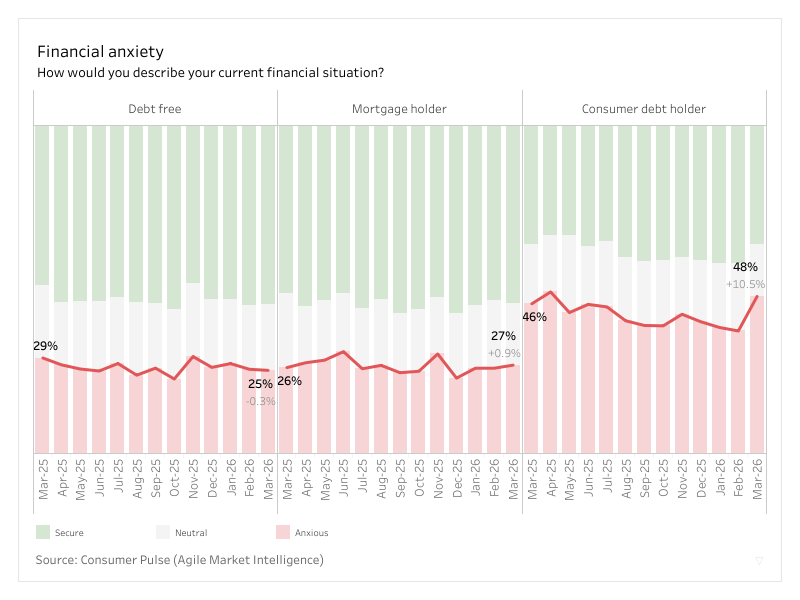
- 48% of consumer debt holders are anxious about their financial situation.
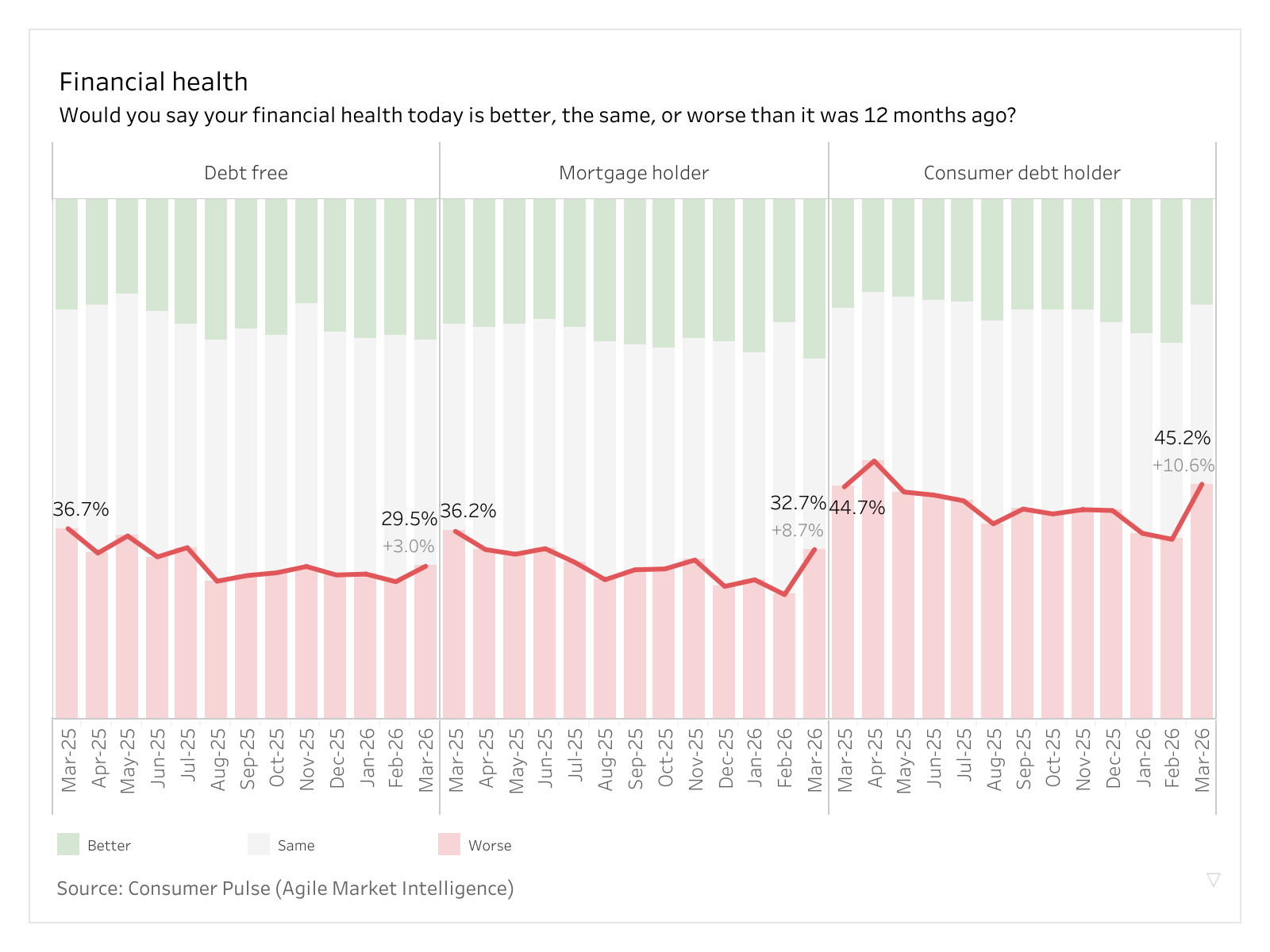
- All segments regardless of debt status feel their finances have worsened now compared to last year, with the largest percentage being consumer debt holders (45.2%).
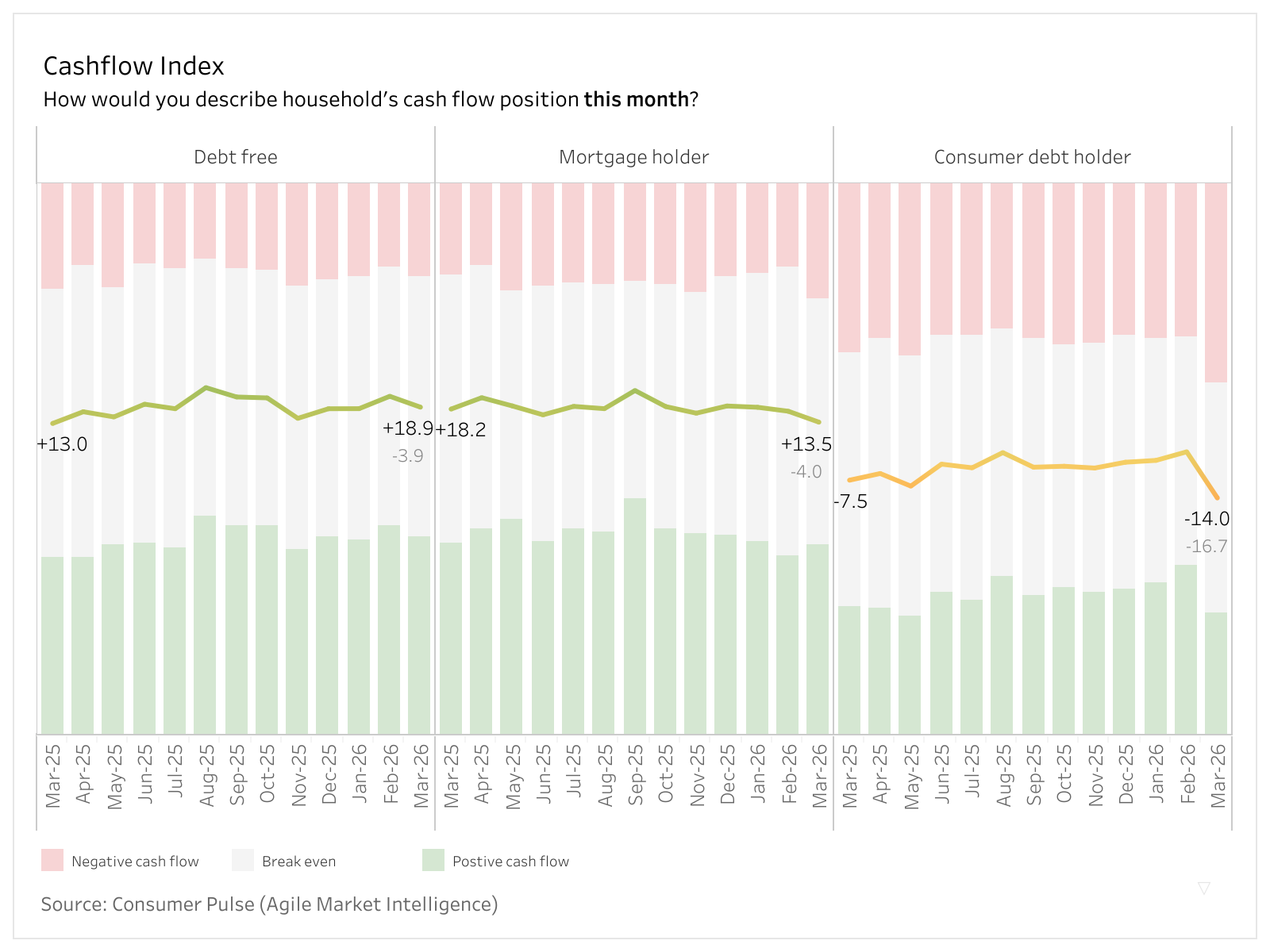
- Consumer debt holders are the only segment to have a negative cashflow index at -14, having dropped by -16.7 points.
More consumer debt holders are worried about their finances seeing increases up to 10.5%
- Nearly 1 in 2 consumer debt holders are anxious about their financial situation
- 1 in 4 debt-free households are worried about their current financial situation.
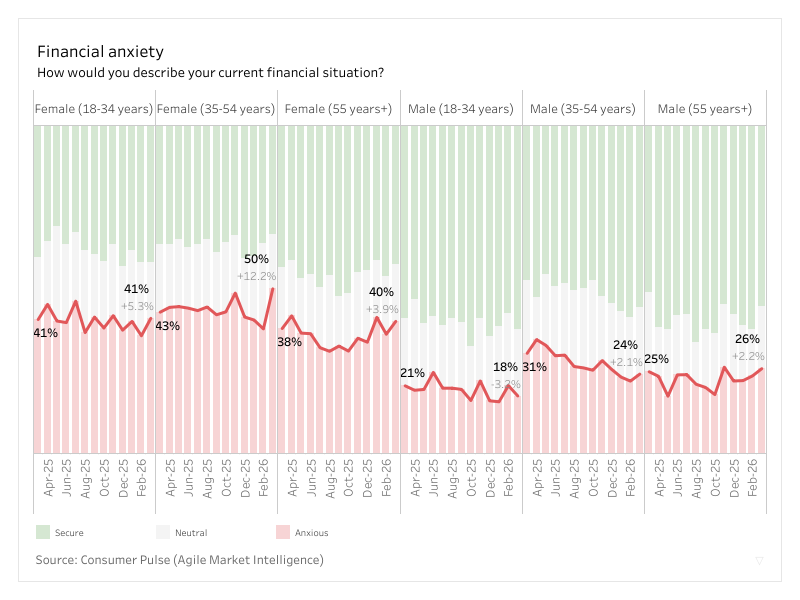
- Females aged 35-54 years old are the most financially anxious (50%) segment in March 2026.
The largest segment of anxious consumers are consumer debt holders (48%), seeing a steep increase of 10.5 percentage points. More mortgage holders are similarly anxious, having risen by 0.9 percentage points. The impact on the supply chain has caused drastic price hikes recently, particularly fuel, due to the conflict ongoing across the other side of the globe. This results in establishments increasing the costs of everyday goods and services, thereby placing further financial pressure on consumers.
Of the various age and gender segments, most segments have reported increased numbers of anxious Australians in March 2026. The only exception are males aged 18-34 years old, who have seen a decrease of -3.2%, and remain to be the segment with the smallest percentage of anxious individuals. The segment with the steepest financial anxiety increase are females aged 35-54 years old (+12.2%), with half of this population expressing worry over their finances (50%).
All feel that financial health has worsened compared to one year ago, with the largest segment being consumer debt holders (45%)
- Nearly 1 in 3 mortgage holders report their financial situation has declined.
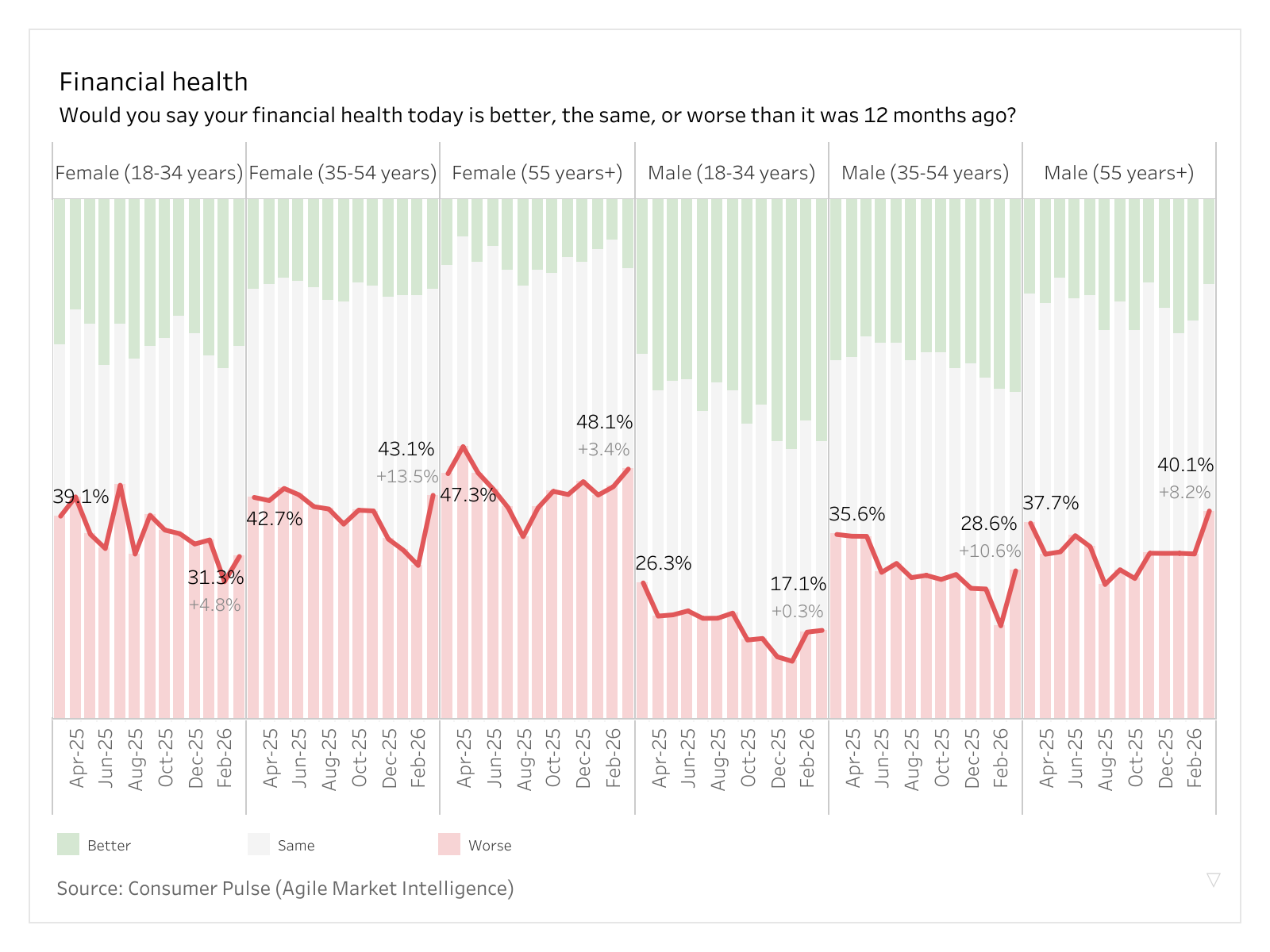
- The financial situation has worsened for 48.1% of females aged 55 years old and above.
- An additional +10.6% more males aged 35-54 years old feel that their financial health is worse now compared to a year ago.
More Australians, regardless of debt status, feel that their financial situation is worse off this March 2026 compared to March last year. The largest segment of anxious consumers are consumer debt holders, seeing an increase of 10.6 percentage points reaching 45.2% overall. 3% more debt-free Australians and 8.7% more mortgage holders have also expressed concern over their financial situation.
Almost all segments have seen increases in the number of financially anxious Australians. The steepest increase of financially anxious individuals are females aged 35-54 years old (+13.5%), with now over 2 in 5 in this segment feeling their financial situation has worsened (43.1%).
All Australians report decrease in cash-flows ranging between -3.9 and 16.7
- Consumer debt holders are the only segment to have reported negative cash flows at -14.
- Despite seeing decreases in cash flows, both debt-free and mortgage holders still cite positive cash flows at +18.9 and +13.5, respectively.
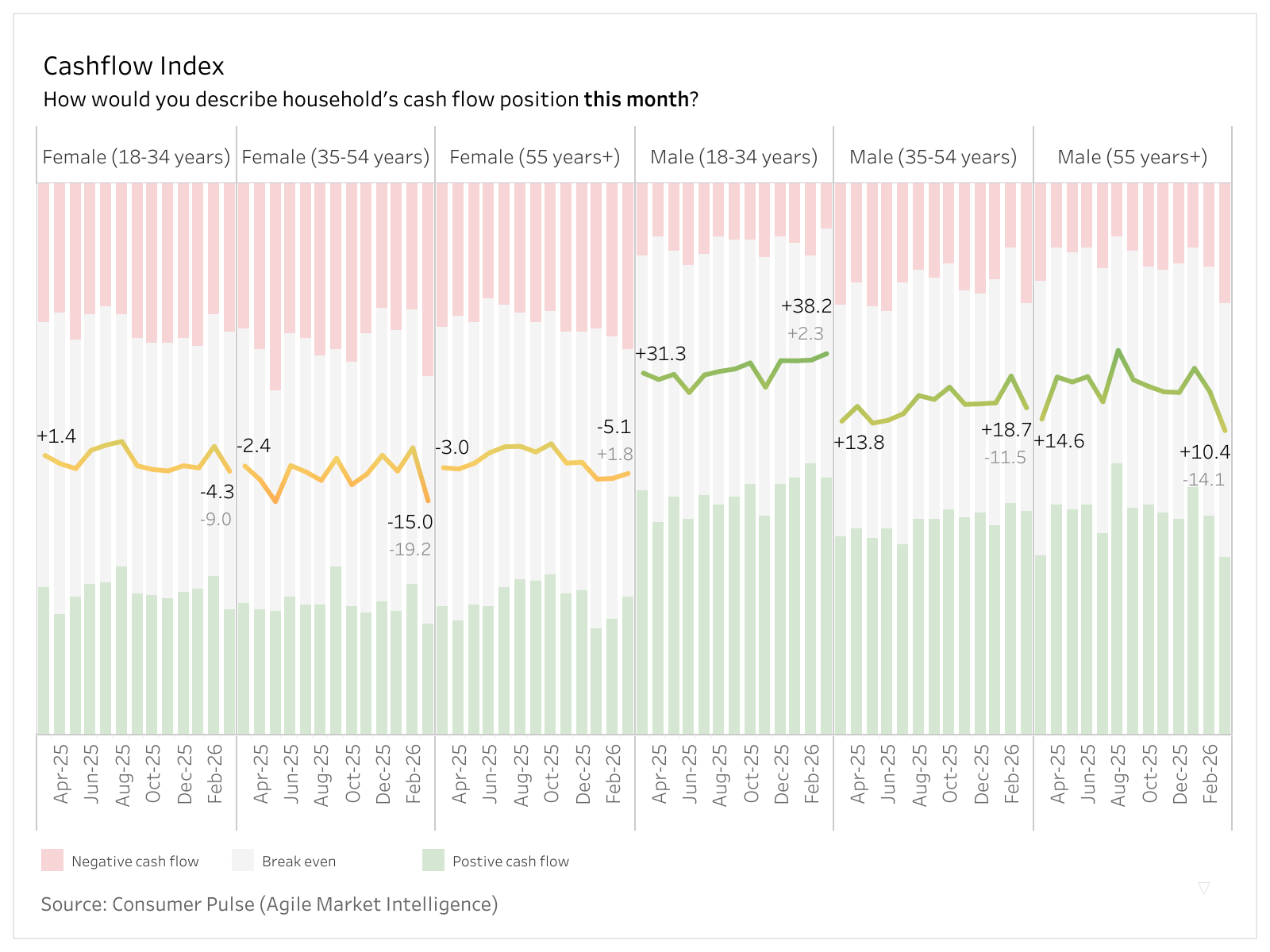
- Males aged 18-34 years old report the highest positive cash flow at +38.2.
Regardless of debt status, all Australian households have reported a decrease in their cash flows for the month of March. The steepest decrease is consumer debt holders, dropping by -16.7 points. Debt-free and mortgage holders have also declined by -3.9 and -4 points, respectively, yet still enjoy positive cash flows overall.
All females have reported negative cash flows, while all the male segments have positive cash flows. The segment with the steepest decline are females aged 35-54 years old, seeing a decrease of -19.2 and landing with the lowest cashflow index at -15.
About the research
This article is based on findings from Agile Market Intelligence’s Consumer Pulse survey, conducted from March 2025 to March 2026. The survey collected responses from 19,842 Australian consumers, weighted to reflect national population profiles by age, gender, and state. The survey gathers about 1,500 responses monthly. The Consumer Pulse is a monthly tracker developed by Agile Market Intelligence to monitor consumer sentiment, financial stress, and behavioural shifts across key household segments. The survey provides a real-time view of financial wellbeing in Australia, segmented by debt status, home ownership, and other demographics.
