


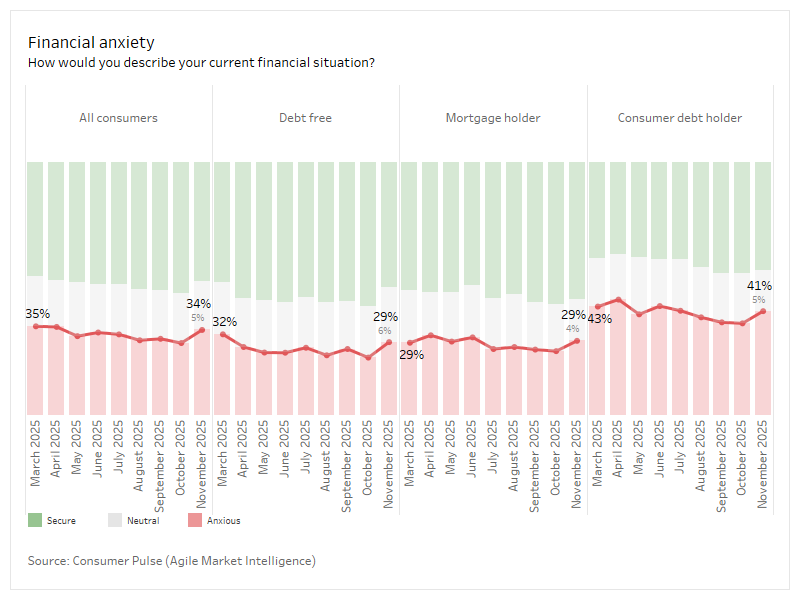
Consumer Pulse is an always-on survey of Australian consumers to understand their attitudes, experiences and priorities towards their finances and financial institutions. During this time of rising inflation, the survey tracks consumer sentiment based on their financial security/anxiety, their perceived financial health relative to a year ago, and their reported household cashflow for the current month. Effects are immediately felt as data shows consumer financial anxiety rose in November.
Key stats you need to know
- Australians, regardless of debt-status and age, are noticeably more financially anxious in November compared to October.
- 2 out of 5 consumer debt holders (41%) reported feeling financially anxious in November.
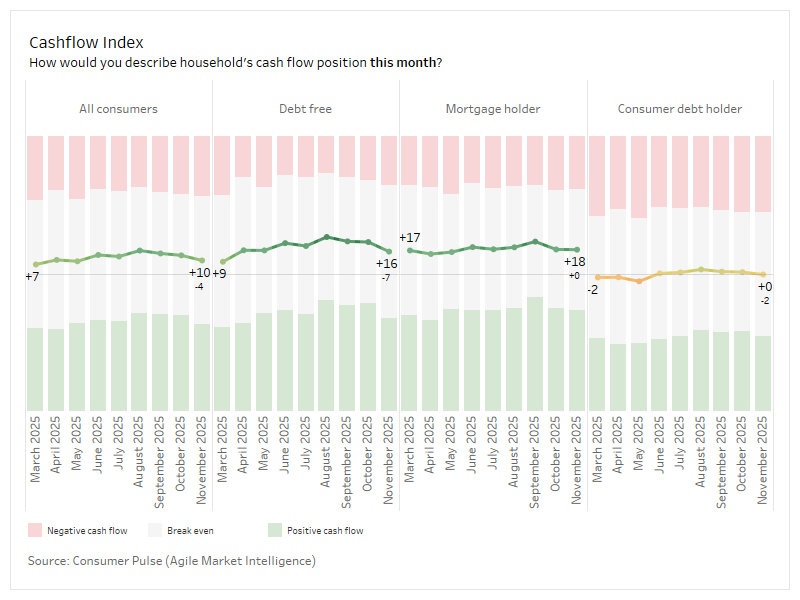
- Based on debt status, the ‘debt-free’ segment reported the largest drop in cash flow by about -7 points.
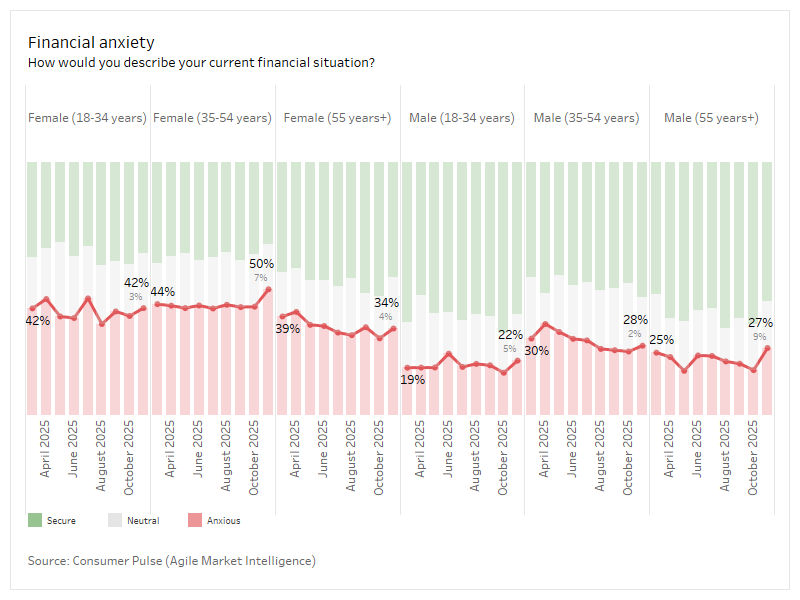
50% of female Australians aged 35-54 years old are feeling increasingly anxious about their financial situation
- More Australians feel anxious about their financial situation in November, covering 34% of the population.
- 1 in 2 females aged 35-54 years old are the most financially anxious age/gender group in the population, which saw a 7% increase from last month.
- Males aged 55 years old and above saw the largest increase in financial anxiety, growing 9% from the previous month.
Among all consumers, about 5% more Australians are concerned about their financial situation in November. Just over 2 out of 5 consumer debt holders are anxious about their financial situation, a 5% increase from October. Debt free households and mortgage holders have 29% of either group that are financially anxious, seeing increases of 6% and 4%, respectively.
Females 35-54 years old are the most worried age/gender group, with 50% feeling anxious about their financial situation. This is the highest share of financially anxious households recorded for any group all year. Similarly, the largest group of males worried about their finances are those aged 35-54 years, occupying 28% of their group. A greater percentage of males aged 55 years and above are feeling anxious about their financial situation at present, showing a 9% increase from last month. In general, however, females continue to express higher numbers of financial anxiety compared to males.
Despite an increase of anxious Australians, 66% feel that their financial situation is better or remained the same compared to one year ago
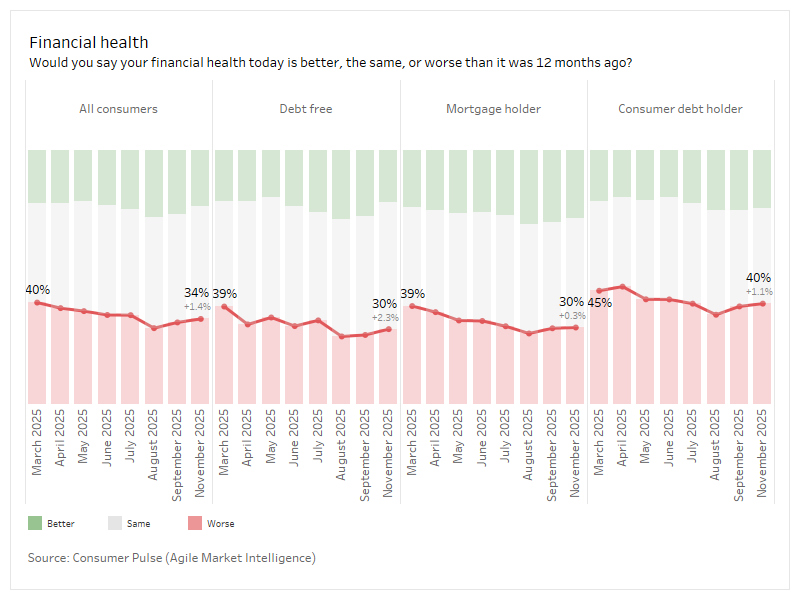
- 30% of debt free Australians feel that their financial situation has worsened compared to one year ago. This group saw the largest increase from the previous month, up + 2.3%.
- Consumer debt holders have the largest share of households saying their financial situation is worse at 40%.
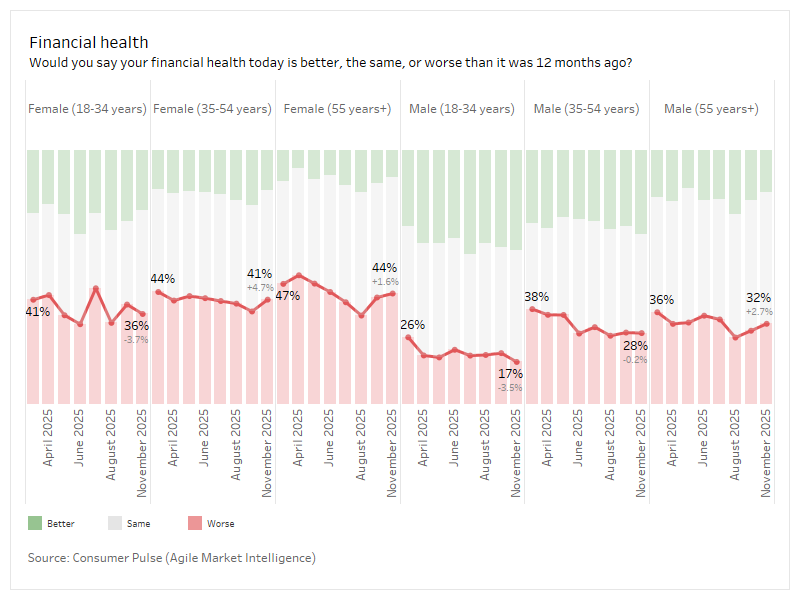
- Females and males aged 55 years old and above are consistently feeling their financial situation has worsened in the past few months.
The percentage of consumers that feel their financial health has worsened compared to 12 months ago has increased slightly, regardless of debt status. The largest number of financially anxious Australians are consumer debt holders, with 40% of them expressing concern over their situation. More debt free and mortgage holders are also worried, showing 2.3% and 0.3% increases compared to last month, respectively.
Females and males aged 18-34 years old feel that their financial situation has either improved or stayed the same in November. Less females in this group are worried, with a 3.7% decline, while 3.5% less males are concerned as well. By contrast, females aged 35+ years and males 55+ years feel that their financial health has worsened. Women aged 35-54 years old in particular have the biggest percentage jump, with 4.7% more females expressing that their situation has worsened. This is followed by males 55+ years, with a percentage jump or 2.7%. The largest group that feels their financial health has worsened at present are women aged 55 years and above, occupying 44% of this demographic.
“Inflation hikes appear to be affecting older Australians disproportionately. Unlike younger cohorts who still have years to earn and save, the 55+ are growing increasingly concerned about how the current situation will affect their retirement.” says Michael Johnson, Director at Agile Market Intelligence.
Men report decreased cash flows in November 2025
- Australians reported less positive cash flow, dropping by -4 points.
- Mortgage holders have the most positive cash flow at +18, and did not experience any drops in November.
Although consumers showcase positive cash flows in November, the net flow has dropped by -4 points. A similar scenario is seen for debt free consumers, having declined by -7 points, the largest dip across all kinds of debt statuses. Only mortgage holders maintained their cash flow from October.
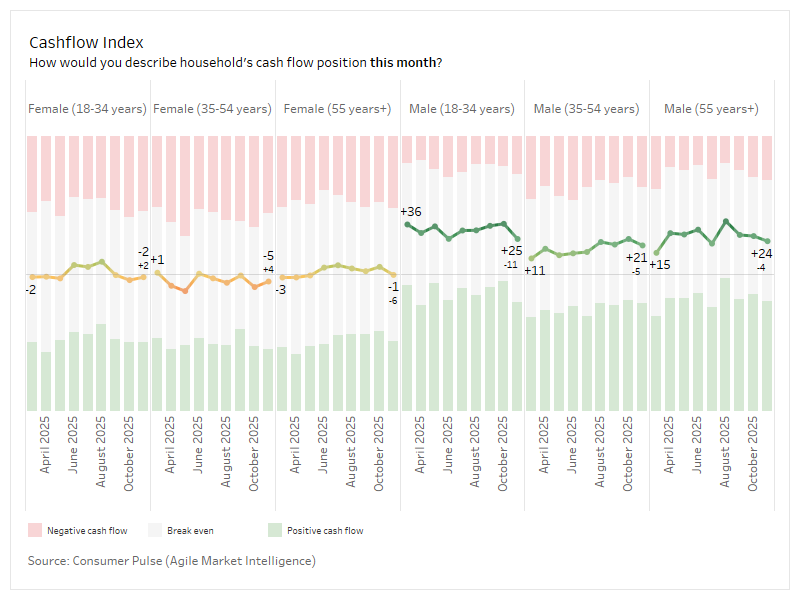
Interestingly, while males reported more positive cash flows compared to females, all male age groups have seen their cashflow drop in November. For males aged 18-34 years old, finances dropped by -11 points compared to last month, the biggest drop amongst all age and gender groups. The cash flow of males aged 35-54 years dropped by -5 points, and those aged 55+ years dropped by -4 points. By contrast, females aged 18-34 years old and 35-54 years old reported cash flow increases by +2 and +4 points, respectively. Females aged 55 years and above is the only female group to have contracted in terms of cash flows, dropping by -6 points. Whether the decreased cash flow comes from increasing cost of living, or increased spending is unclear.
About the research
This article is based on findings from Agile Market Intelligence’s Consumer Pulse survey, conducted across March to November 2025. The survey collected responses from 12,944 Australian consumers, weighted to reflect national population profiles by age, gender, and state.
The Consumer Pulse is a monthly tracker developed by Agile Market Intelligence to monitor consumer sentiment, financial stress, and behavioural shifts across key household segments. The survey provides a real-time view of financial wellbeing in Australia, segmented by debt status, home ownership, and other demographics.
